Why chefs choose leather
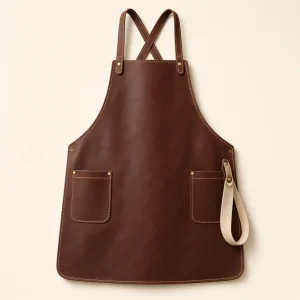
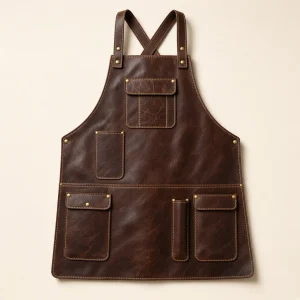
Professional kitchens are hard on aprons. Cotton bib aprons are cheap, but they soak up fat, go through the laundry several times a week and wear thin. A full grain leather chef apron sheds splashes from the fryer and the sauté station, wipes clean between services, and keeps its shape so your pockets stay where you expect them. In an open kitchen, it also says something about the restaurant before the first plate goes out: a burnished leather apron with brass hardware looks like craft.
Leather is heavier than cotton, so a chef apron has to be designed around comfort. That is why this collection focuses on strap systems that spread weight, flexible 4 oz leather for most stations, and lighter waxed canvas models with leather straps for the hottest kitchens.
Comfort over a 10–12 hour shift: which strap?
Comfort is the most important feature in a chef apron, and it comes down to how the weight is carried. Here is how the strap types compare across a long shift:
| Strap |
First hour |
After 8–12 hours |
Best for |
| Neck strap |
Quick and easy |
Can cause neck strain with leather |
Short shifts, front of house, prep sessions |
| Cross-back |
Takes seconds longer to put on |
Weight spread over both shoulders; most comfortable |
Line cooks, sous chefs, long services |
| H-back |
Easy to slip on like a vest |
Even shoulder load, no strap across the spine |
Broad shoulders, chefs who move a lot at the pass |
| Canvas body, leather straps |
Light |
Lightest overall; cooler in hot kitchens |
Very hot stations and summer services |
Bib length and features by station
Different stations need different aprons. Use this guide to match yours:
| Station |
Length |
Must-have features |
| Line / sauté / fry |
Standard, to just above the knee |
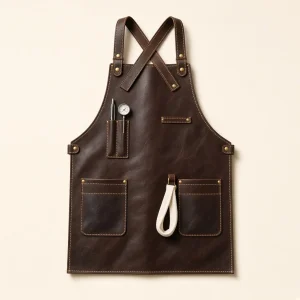
Pen and thermometer sleeve, towel loop, cross-back |
| Grill and wood-fire stations |
Long |
5 oz leather, knife pocket, full-length cover |
| Pass and expo |
Standard |
Chest pocket for tickets and pens, smart finish |
| Pastry and bakery |
Standard |
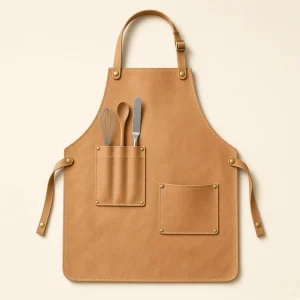
Bench-scraper pocket, piping-tip pouch, cross-back |
| Open kitchen and front of house |
Standard, slimmer cut |
Clean look, cognac or black leather, brass hardware |
Tall chefs (6’0″ to 6’6″) should choose the Long size (36 × 26 in); everyone else will usually be comfortable in Standard (32 × 25 in). Our long-shift chef apron is made in the Long size only. See the size guide for measuring.
Pockets that work on the line
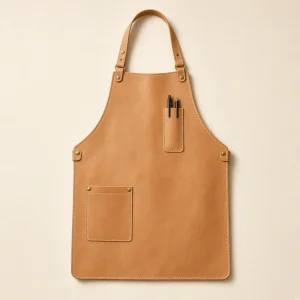
- Pen sleeve. Narrow chest sleeves for Sharpies, pens and a probe thermometer — always within reach, never in the way.
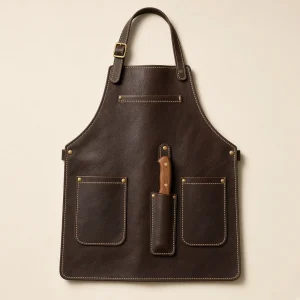
- Knife pocket. A lined, riveted hip pocket for a small sheathed knife. Always store blades sheathed; leather is not cut-proof.
- Towel loop. Keeps a side towel at hand for wiping plates and grabbing hot pans.
- Chest pocket. For tickets, a notebook or a phone during prep.
- Hip pockets. Deep enough for tasting spoons and tweezers, riveted so they do not tear out.
Leather or waxed canvas with leather straps?
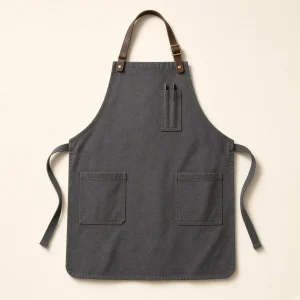
A full leather chef apron gives the most protection and the longest life. In a very hot kitchen, though, some chefs prefer something lighter. Our waxed canvas chef aprons keep the leather where it matters — cross-back or neck straps, pockets and trims — and use a tough cotton canvas body for less weight and more airflow.
|
Full grain leather |
Canvas with leather straps |
| Splash and heat protection |
Highest |
Good (waxed) to moderate (plain canvas) |
| Weight |
About 1–1.5 kg |
Much lighter |
| Cleaning |
Wipe clean between services |
Spot clean; plain canvas can be hand-washed |
| Look |
Develops a patina |
Workwear look, leather details age |
| Best for |
Long-term, daily use; open kitchens |
Hot stations, summer, large teams |
Heat in the kitchen: staying cool in a leather apron
The most common worry chefs have about leather is heat. Leather insulates, which is exactly why it protects you from splatter and radiant heat from the range — but in a hot kitchen it also means you feel warmer than in thin cotton. A few things help. Choose 4 oz leather for most stations; it is noticeably lighter and more flexible than 5 oz. Pick a cross-back or H-back strap so the apron hangs away from your neck and lets air move. Wear a breathable chef jacket or a light T-shirt underneath. And if your station is very hot, choose one of our canvas chef aprons with leather straps: you keep the leather look and the durable straps, with much less weight and more airflow.
Keeping a leather chef apron clean in a commercial kitchen
Kitchen hygiene matters, so here is a routine that works with leather:
- During service, wipe splashes with a clean damp cloth.
- After service, wipe the whole apron with warm water and a little mild soap, then wipe with clean water.
- Hang it to air-dry away from ovens and heat lamps — never on the pass.
- Condition the leather every few weeks with heavy use, so it does not dry out.
- Never put leather in the kitchen laundry, a washing machine or a dryer.
Leather aprons are personal kit, like knives: one chef, one apron. Giving each cook their own apron is better for hygiene and lets the leather mould to its owner. More tips are in our leather care guide.
What to look for in a professional chef apron
Before you buy, check these points — they separate a chef apron that lasts years from one that is retired after a season:
- Real full grain leather, not “genuine” split or bonded leather that cracks at the folds.
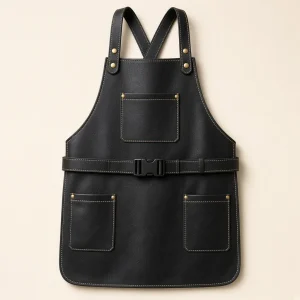
- A strap system for long shifts — cross-back or H-back, with adjustable buckles.
- Riveted stress points at pocket corners and strap anchors.
- Rust-proof hardware, such as solid brass, because kitchens are humid.
- Finished edges that are burnished, so they do not fray or scratch your arms.
- A warranty on the straps, which take the most strain.
Chef aprons by role
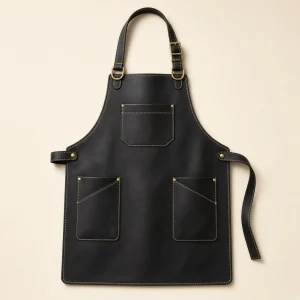
Head chefs and executive chefs are often on the pass and in front of guests, so look and comfort matter as much as protection. A tailored black apron with brass hardware or an H-back design looks sharp all evening. Line cooks and sous chefs need maximum practicality: a lightweight bib with a pen sleeve, or a cross-back with a towel loop and riveted hip pockets. Pastry chefs need arm freedom and pockets for scrapers and piping tips. Private chefs and caterers move between kitchens and dining rooms, so a cognac or chestnut apron that looks good in a client’s home is a smart choice. Grill chefs working over wood or charcoal should choose 5 oz leather and the Long size.
Breaking in a new leather apron
A new full grain apron feels slightly firm for the first few shifts. That is normal: the leather softens and moulds to your body as you wear it. To speed things up, wear it for a few prep sessions, flex the straps by hand, and apply a light coat of leather conditioner after the first week. Within a month it will feel like part of your kit, and the colour will start to deepen into a patina.
Colours for the kitchen and the dining room
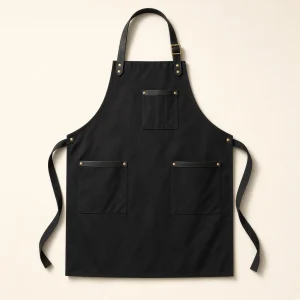
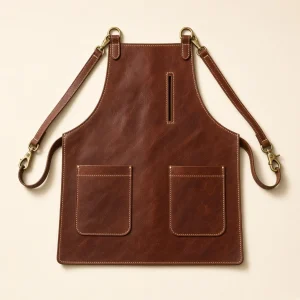
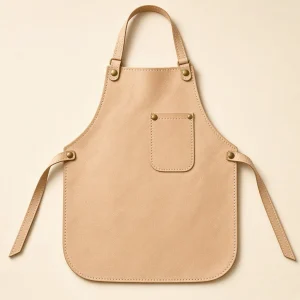
Black is the professional standard: it hides marks and looks sharp in an open kitchen, especially with brass hardware. Dark walnut and chestnut give a warmer, artisan look. Cognac suits front-of-house and chef’s-table service. Natural tan suits pastry, where flour shows less than on black.
Built for daily service
Every leather chef apron is cut from full grain cowhide by Apron Stitch Workshop and finished in small batches. Pocket corners and strap anchors are riveted, the stitching is waxed thread, the buckles and rings are solid brass, and the edges are hand-burnished. These details are what let a chef apron go through hundreds of services without the pockets tearing or the straps pulling out — and why every strap, buckle and strap seam is covered by our lifetime strap warranty.
Aprons for your whole team
Restaurants, hotel kitchens, catering companies and cooking schools can order matching chef aprons with the logo engraved on every piece. Team orders start at 10 aprons — see wholesale leather aprons for details, or contact us with your team size. For a single apron with your name or initials, engraving is free; see custom leather aprons.
Cooking at home rather than in a restaurant?
Many home cooks like chef aprons, and they work well at home. If you cook in shorter sessions, you may prefer our leather cooking aprons, which are designed around home kitchens. For grilling and smoking, see our BBQ aprons, or browse every style on the leather aprons page.
US orders over $99 ship free with standard shipping, and unused aprons can be returned within 30 days.